
One of the oldest Muslim monuments in South Asia
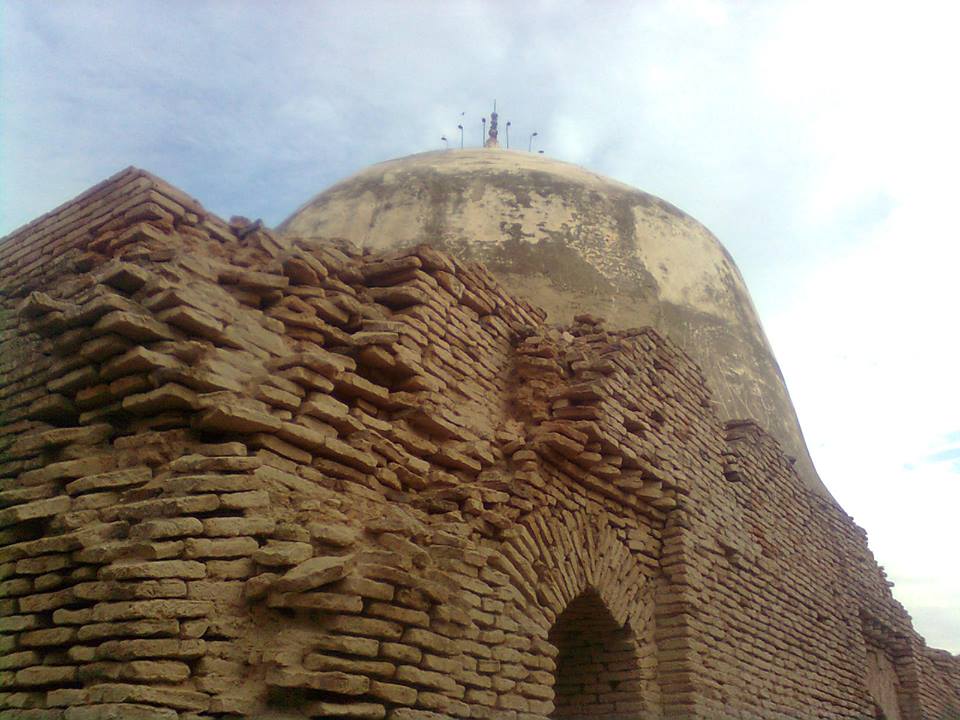
In the fields of Khatti Chor, about 24 km west of Kabirwala on the Multan–Sarai Sidhu road, stands a low, thick-walled brick building that looks more like a small fort than a tomb. It is the tomb locals call Khalid Waleed, and it is one of the most important buildings in Pakistan. Historians date it to the last quarter of the 12th century, which makes it one of the earliest surviving Muslim funerary monuments anywhere in South Asia – older than the Qutb Minar in Delhi.
Who is buried here?
Despite the name, this is not the grave of the Companion Khalid ibn al-Walid (RA), who is buried in Homs, Syria. The saint buried here is Khaliq Wali, a holy man of the 11th–12th century; over the centuries his name was popularly changed to Khalid Waleed. Local tradition says he came to the Multan region with the armies of Mahmud of Ghazni and died here.
An inscription on the building names its builder: Ali bin Karmakh, who governed Multan for Sultan Muhammad of Ghor between about 1175 and 1186. The tomb was later rediscovered and identified by the archaeologist Dr Ahmad Nabi Khan and the architect Kamil Khan Mumtaz.
What you will see
The tomb is a fortified rectangle of about 70 by 90 feet, with plain brick walls that slope inwards and round bastions at each corner and in the middle of three of the walls. Crenellations run along the roofline, and a low dome sits over the centre. This military look is unusual for a tomb and probably comes from Central Asian (Seljuk) building traditions.
Inside, a square chamber about 24 feet across is surrounded by vaulted galleries, with an entrance on each side. The highlight is the mihrab on the western wall: a small projection of cut and moulded brick with Kufic calligraphy and a canopy-like hood. Architectural historians single it out as exceptional for its age. Look also for the bands of wood set into the brickwork and traces of glazed brick.
Condition
The tomb is a protected monument. A government planning study in 2023 photographed parts of it in a dilapidated state and called for preservation, boundaries and visitor facilities. There is no ticket office, café or guide on site, so bring water and ask locals if the caretaker is around.
Visiting tips
- Getting there: From Kabirwala take the Sarai Sidhu road west for about 24 km to Khatti Chor. The last stretch is on village roads – a car or motorcycle is easiest.
- Best time: October to March. Summer afternoons in the open fields are very hot.
- Respect: It is a working shrine. Dress modestly, remove shoes where asked, and avoid climbing the walls.
- Combine with: Kabirwala town, or the drive on to Sarai Sidhu.
References
- "Shrine of Khalid Walid", Wikipedia – location, date, builder, plan and mihrab, citing Bloom & Blair, Grove Encyclopedia of Islamic Art & Architecture (2009) and Ahmad Nabi Khan, Multan (1983). en.wikipedia.org
- "Kabirwala", Wikipedia – Mauza Khatti Chor, Multan–Sarai Sidhu road, 24 km west of Kabirwala. en.wikipedia.org
- Abdul Basit & Muhammad Shafique, "Tomb of Khaliq Wali alias Khalid Waleed of Khatti Chor (Kabirwala)", Journal of Historical Studies, BZU, Vol. V No. II (2019). jhs.bzu.edu.pk
- Pakistan Heritage, "Tomb of Khaliq Walid" – Ali bin Karmakh (1175–1186), local tradition about Mahmud of Ghazni. pakheritage.org
- Urban Unit, Multan Regional Development Plan – Tourism Sector Report (2023) – condition and recommendations. urbanunit.gov.pk
By Asif Shehzad · Last updated 20 November 2026
Comments