
Where the Ravi runs straight
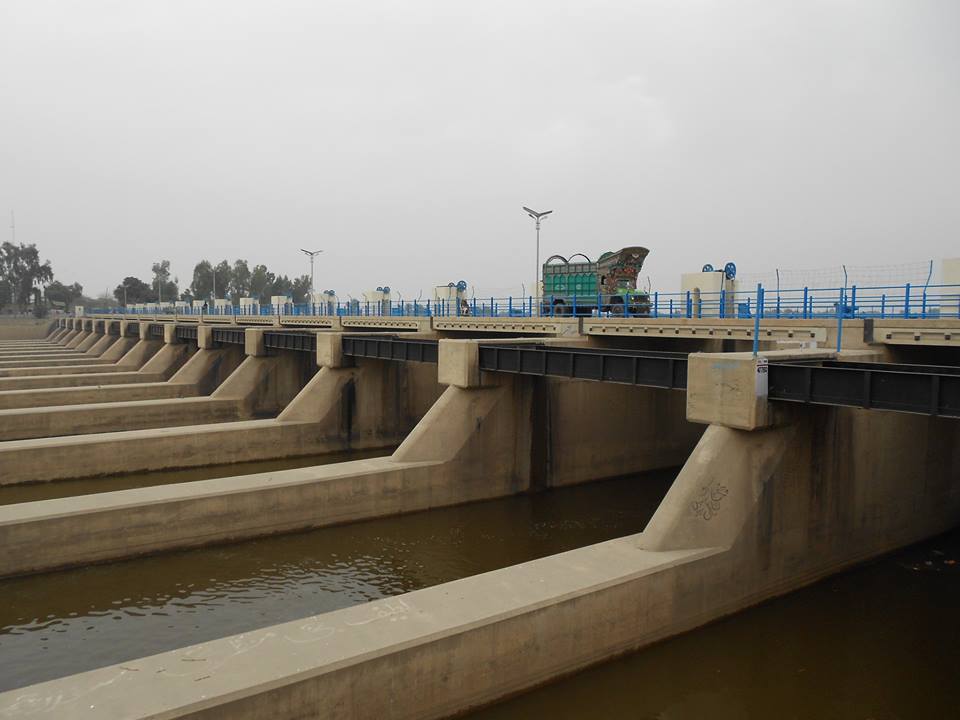
"Sidhnai" means straight river. Near Abdul Hakeem, the Ravi – usually a winding river – runs almost dead straight for about eight miles, and that stretch gave its name to the barrage that now controls the river here. Head Sidhnai, as locals call it, is about 5 km from Abdul Hakeem in Kabirwala tehsil. Eleven of its gates are in Khanewal district and four are across the river in Toba Tek Singh district.
Why it was built
Under the Indus Waters Treaty of 1960, the waters of the Ravi, Sutlej and Beas went to India. To keep the canals of southern Punjab running, Pakistan built a network of link canals that carry water from the Indus, Jhelum and Chenab into the old Ravi and Sutlej canal systems. The new Sidhnai Barrage, completed in 1965 as part of the Indus Basin Project, is one piece of that system: it takes water brought from the Chenab at Trimmu through the Trimmu–Sidhnai link canal and feeds the Sidhnai Canal and the Sidhnai–Mailsi–Bahawal link.
The barrage was built about 6 miles upstream of the old Sidhnai weir of the British era, which was then dismantled. Its design capacity is about 150,000 cusecs. A little further downstream the Ravi ends its journey, joining the Chenab near the village of Fazil Shah.
What to do there
For most of the year the water above the barrage is calm, and the banks are popular for fishing, walks and birdwatching, especially in winter when migratory birds arrive. There is a mosque, an Irrigation Department rest house and space to park. A 2023 government planning study described the site as having real potential for eco-tourism and boating, but no proper recreational facilities yet.
The 2025 floods
In late August and September 2025 an unusually high flood came down the Ravi. On 3 September 2025 the flow at Sidhnai reached about 188,000 cusecs – well above its design capacity. To protect the barrage, the Mai Safoora embankment was deliberately breached, and water spread into villages of Kabirwala and Pir Mahal. The district administration reported that 160 mouzas in Khanewal were affected and about 129,500 acres were flooded.
Visiting tips
- Getting there: Head for Abdul Hakeem (it has its own M-3/M-4 interchange and railway station) and follow the road to the barrage, about 5 km away.
- Best time: October to March. Avoid the monsoon months (July to September), when the river can rise quickly.
- Safety: Stay away from the gates and the fast water below the barrage, and keep children close to you on the banks. Photography of the structure may be restricted – ask staff.
- Combine with: the shrine of Sultan Abdul Hakeem and Tulamba Fort.
References
- Federal Flood Commission, Flood Fighting Plan, Sidhnai Headworks Division (2023, 2025) – location, meaning of the name, bays in Khanewal and Toba Tek Singh, Indus Basin Project. ffc.gov.pk
- "List of barrages and headworks in Pakistan", Wikipedia – Sidhnai Headworks, Ravi, 1965. en.wikipedia.org
- Dunya News, "From Balloki to Guddu: list and capacity of major barrages in Pakistan" – capacity about 150,000 cusecs. dunyanews.tv
- The Friday Times, "River Ravi Floods 2025" – 188,000 cusecs on 3 September 2025, 160 mouzas, 129,508 acres. thefridaytimes.com
- Aaj News, "Embankment breached to protect Sidhnai headworks near Khanewal" (3 September 2025). aaj.tv
- Urban Unit, Multan Regional Development Plan – Tourism Sector Report (2023). urbanunit.gov.pk
By Asif Shehzad · Last updated 20 November 2026
Comments